Viewing entries tagged
A life worth living

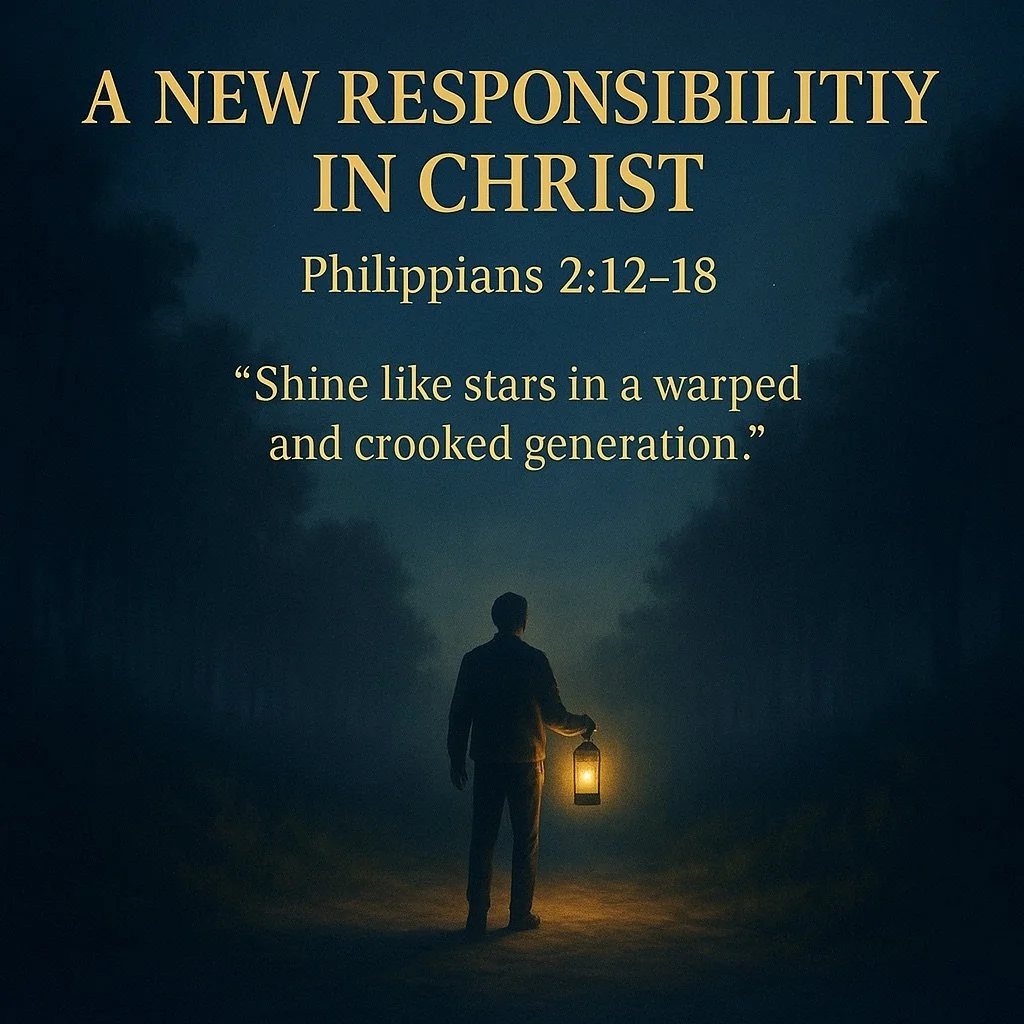
Bible Study: A life worth living - Session 4 (A New Responsibiity)

Bible passage: Philippians 2:12–18

Read online: https://tinyurl.com/08-10-2025-Bible


Summary of our bible discussion

Last night we learned that salvation is not just a gift to receive — it’s a life to live out.
Paul moves from describing Jesus’ humility (vv.5–11) to calling us into a new responsibility: “Therefore, continue to work out your salvation with fear and trembling, for it is God who works in you.”

We discovered that obedience is more than rule-keeping — it’s a posture of listening.
The Greek word hupakouō means “to hear under authority.” It’s that old Pentecostal idea of “sitting under a word” — living in surrender, letting God’s voice shape your steps.

Then came Paul’s balance:

“Work out your salvation” — but remember, “it is God who works in you.”

That’s the dance of grace and obedience.
We don’t work for salvation, we work from salvation.
It’s God’s energy inside us (energeō) that fuels our will and empowers our action.

Dallas Willard put it perfectly:

“Grace is not opposed to effort; it’s opposed to earning.”

Paul then turns outward: our responsibility to society.
He says, “Do everything without grumbling or arguing.”
That’s radical in a culture that thrives on complaint!
Gratitude becomes our protest; peace becomes our witness.

When we live this way — blameless, pure, shining like stars — we stand out in a world gone crooked.
Like Israel in the wilderness, we can choose to whine or worship. Paul says: “Don’t curse the darkness — light a candle.”

The heart of it all?
We shine as we hold out the Word of Life.
This “Word of Life” is not just ink on a page — it’s Jesus Himself, the living message of God’s love.
As we cling to Him and share Him, our lives radiate with His light.

Finally, Paul points to our responsibility to one another — the Church.
We are to run the race faithfully, pour out our lives like a drink offering, and share joy together.
Even in prison, Paul’s joy was contagious — because joy is not the absence of hardship, but the presence of perspective.
It’s the strength of seeing Christ at work, even in chains.

Final thought:
The Christian life isn’t about climbing up — it’s about pouring out.
It’s not about getting our way — it’s about following His way.
And the only way up in the Kingdom… is down.


Resumen de nuestra discusión bíblica

Anoche aprendimos que la salvación no es solo un regalo que recibimos, sino una vida que debemos vivir.
Pablo pasa de describir la humildad de Jesús (vv.5–11) a llamarnos a una nueva responsabilidad:
“Por tanto, ocúpense en su salvación con temor y temblor, porque Dios es quien produce en ustedes tanto el querer como el hacer.”

Descubrimos que la obediencia no se trata solo de cumplir reglas, sino de tener una actitud de escucha.
La palabra griega hupakouō significa “escuchar bajo autoridad”. Es como “sentarse bajo una palabra” — rendirnos para que la voz de Dios moldee nuestro caminar.

Luego Pablo equilibra la ecuación:

“Ocúpense en su salvación”, pero recuerden, “Dios es quien actúa en ustedes.”

Es la danza de la gracia y la obediencia.
No trabajamos para ganar la salvación, trabajamos desde la salvación.
Es la energía divina (energeō) en nosotros la que mueve nuestra voluntad y fortalece nuestra acción.

Dallas Willard lo dijo así:

“La gracia no se opone al esfuerzo, se opone al mérito.”

Después, Pablo mira hacia afuera: nuestra responsabilidad hacia la sociedad.
Dice: “Háganlo todo sin quejas ni discusiones.”
En una cultura que vive de la queja, esto es revolucionario.
La gratitud se convierte en nuestro acto de resistencia; la paz en nuestro testimonio.

Cuando vivimos así — intachables, puros, brillando como estrellas — resaltamos en un mundo torcido.
Como Israel en el desierto, podemos elegir entre quejarnos o adorar. Pablo dice:
“No maldigas la oscuridad — enciende una vela.”

El corazón del mensaje:
Brillamos cuando sostenemos la Palabra de Vida.
Esa “Palabra de Vida” no es solo tinta en papel — es Cristo mismo, el mensaje vivo del amor de Dios.
Al aferrarnos a Él y compartirlo, nuestras vidas reflejan Su luz.

Finalmente, Pablo nos habla de nuestra responsabilidad con la Iglesia:
Correr la carrera con fidelidad, derramar nuestras vidas como ofrenda, y compartir la alegría juntos.
Incluso en prisión, la alegría de Pablo era contagiosa — porque la alegría no depende de las circunstancias, sino de la perspectiva.
Es la fuerza de ver a Cristo obrando, incluso en las cadenas.

Punto final:
La vida cristiana no se trata de ascender, sino de derramarse.
No se trata de imponer nuestra voluntad, sino de seguir la suya.
Y en el Reino de Dios… la única forma de subir es bajando.
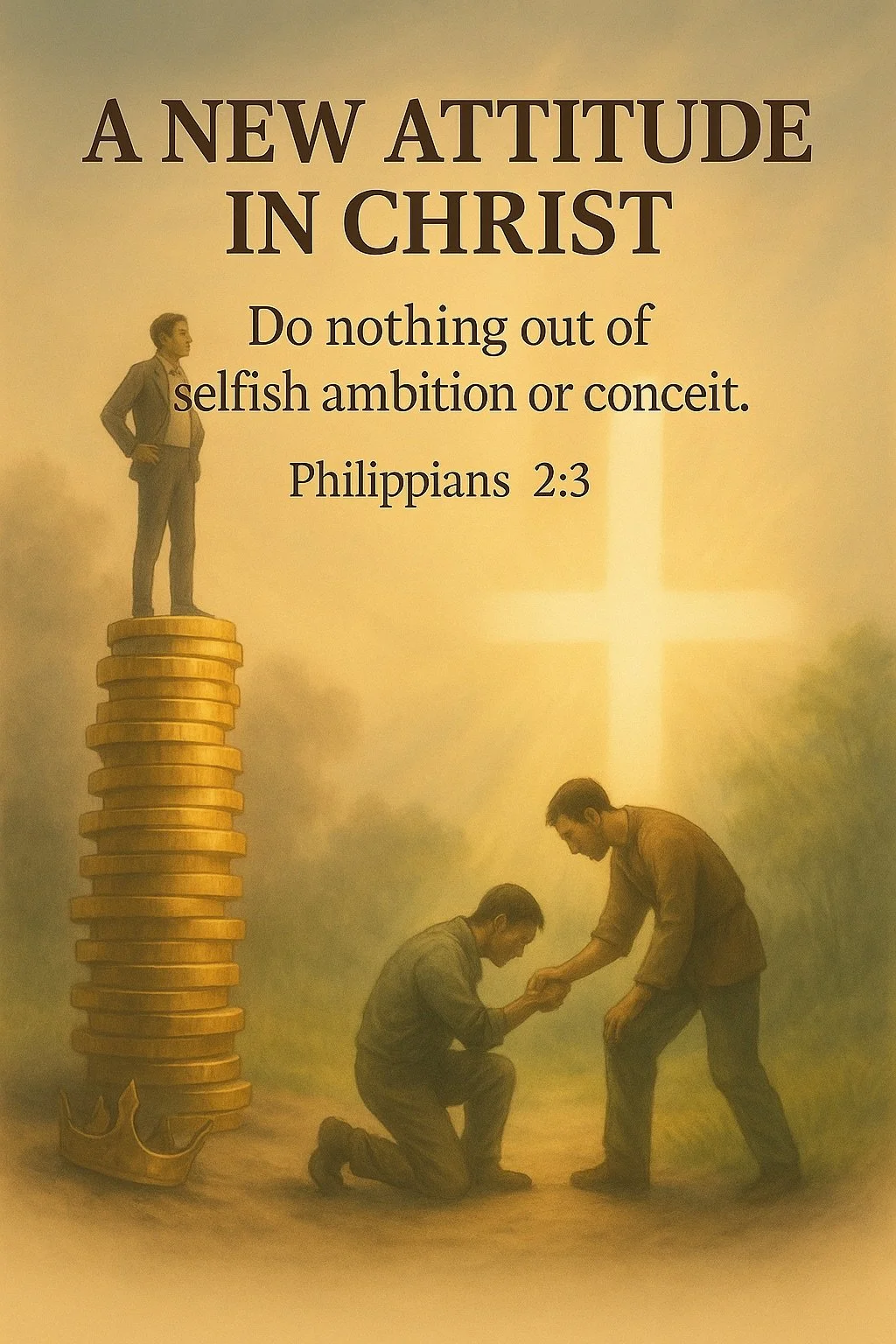
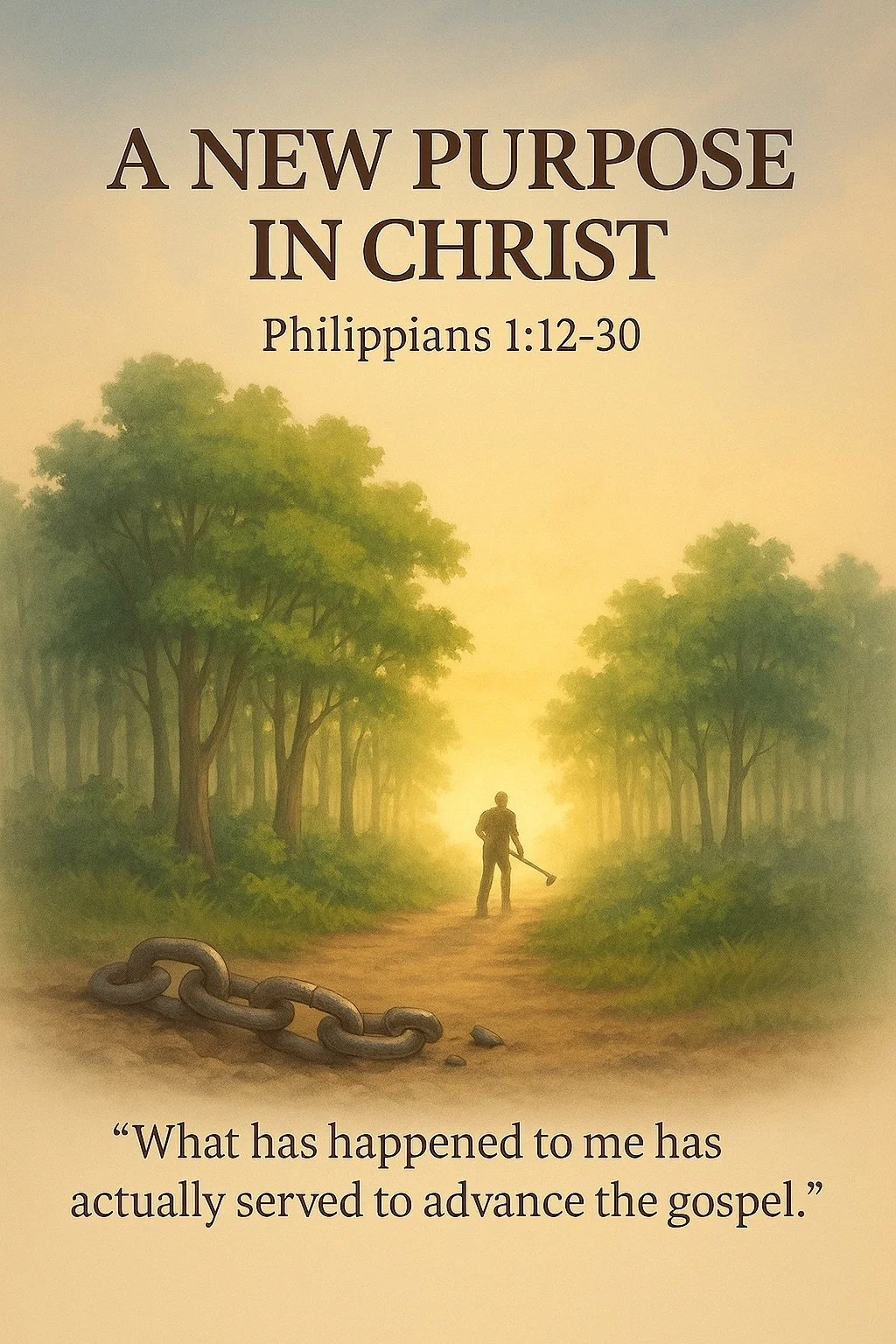
Bible Study: A life worth living - Session 3 (A New Attitude


Summary of our bible discussion

When Paul wrote to the Philippians, he was in chains under house arrest. From the outside, his mission looked over—but Paul saw things differently. He believed that even his suffering was being used by God to spread the gospel. The guards heard the message, believers grew bolder, and his letters from prison are still shaping lives today. His life was not about comfort but about Christ. As he said: “For to me, to live is Christ and to die is gain.” (Phil. 1:21).

In chapter 2, Paul called them to a new way of living “in Christ.” To be in Christ means we no longer live under the old rules of sin and self but under the life and reign of Jesus. This gives us a new identity, a new security, a new belonging, and even a new destiny. It also brings encouragement—through forgiveness, belonging, God’s presence, and the hope of eternal life.

Unity, Paul said, is not optional. It flows from who God is and what He has done for us. But it doesn’t come automatically—it requires humility. Paul warned against selfish ambition and pride, which destroy unity. Instead, he urged us to “value others above yourselves.” This doesn’t mean thinking less of yourself but thinking of yourself less. It’s a Christ-shaped life that looks outward, serving others instead of chasing recognition.

Ultimately, Paul shows us that joy, even in hardship, comes from living for Christ and for others. To live with a new purpose in Christ is to make His mission our mission, His love our love, and His humility our way of life.


Resumen de nuestra discusión bíblica

Cuando Pablo escribió a los filipenses, estaba encadenado bajo arresto domiciliario. Desde fuera parecía que su misión había terminado, pero Pablo lo veía de otra manera. Creía que incluso su sufrimiento estaba siendo usado por Dios para difundir el evangelio. Los guardias escucharon el mensaje, los creyentes se volvieron más valientes y sus cartas desde la prisión todavía transforman vidas hoy en día. Su vida no se trataba de comodidad, sino de Cristo. Como dijo: “Porque para mí, el vivir es Cristo y el morir es ganancia.” (Filipenses 1:21).

En el capítulo 2, Pablo los llamó a una nueva manera de vivir “en Cristo.” Estar en Cristo significa que ya no vivimos bajo las viejas reglas del pecado y del yo, sino bajo la vida y el reinado de Jesús. Esto nos da una nueva identidad, una nueva seguridad, una nueva pertenencia e incluso un nuevo destino. También nos trae ánimo: a través del perdón, la aceptación, la presencia de Dios y la esperanza de vida eterna.

La unidad, dijo Pablo, no es opcional. Fluye de quién es Dios y lo que Él ha hecho por nosotros. Pero no sucede automáticamente: requiere humildad. Pablo advirtió contra la ambición egoísta y el orgullo, que destruyen la unidad. En su lugar, nos llamó a “valorar a los demás por encima de nosotros mismos.” Esto no significa pensar menos de ti mismo, sino pensar menos en ti mismo. Es una vida con la forma de Cristo que se enfoca hacia afuera, sirviendo a los demás en lugar de buscar reconocimiento.

En última instancia, Pablo nos muestra que la verdadera alegría, incluso en medio de la dificultad, viene de vivir para Cristo y para los demás. Vivir con un nuevo propósito en Cristo significa hacer de Su misión nuestra misión, de Su amor nuestro amor y de Su humildad nuestro estilo de vida.

Bible Study: A life worth living - Session 2 (A New Purpose)


Summary of our bible discussion

When Paul wrote to the Philippians, he was chained up under house arrest in Rome. From a human perspective, his mission looked finished. Yet he could see that what had happened to him had actually served to advance the gospel (Phil. 1:12). Instead of being a setback, his chains became a platform. The guards chained to him heard the gospel. Other believers were inspired to speak boldly. And letters written from prison have encouraged millions ever since.

This is Paul’s “new purpose”: not comfort, not self-preservation, but the advancement of the gospel. His life was defined by one great passion: “For to me, to live is Christ and to die is gain” (Phil. 1:21). Living meant fruitful work for Christ; dying meant being with Christ, which was even better. Either way, his life was centred on Jesus.

Paul also reminded the Philippians that their purpose was not just to believe in Christ but to live worthy of the gospel (Phil. 1:27). That meant standing firm together like soldiers in formation, striving side by side for the faith, and refusing to be intimidated by opposition. Even suffering, Paul said, was part of God’s gift—it bound them closer to Christ and made their witness shine brighter.

In short, a life worth living is one that sees every circumstance—good or bad—as an opportunity to know Jesus and make Him known. Paul’s chains may have limited his freedom, but the gospel is never chained.


Resumen de nuestra discusión bíblica

Cuando Pablo escribió a los filipenses, estaba encadenado bajo arresto domiciliario en Roma. Desde una perspectiva humana, su misión parecía acabada. Sin embargo, él pudo ver que lo que le había sucedido en realidad sirvió para avanzar el evangelio (Fil. 1:12). En lugar de ser un retroceso, sus cadenas se convirtieron en una plataforma. Los guardias que lo custodiaban escucharon el evangelio. Otros creyentes fueron inspirados a hablar con valentía. Y las cartas escritas desde la cárcel han animado a millones hasta hoy.

Este es el “nuevo propósito” de Pablo: no la comodidad, no la autopreservación, sino el avance del evangelio. Su vida estaba definida por una gran pasión: “Porque para mí el vivir es Cristo y el morir es ganancia” (Fil. 1:21). Vivir significaba trabajo fructífero para Cristo; morir significaba estar con Cristo, lo cual era aún mejor. De cualquier manera, su vida estaba centrada en Jesús.

Pablo también recordó a los filipenses que su propósito no era solo creer en Cristo, sino vivir dignos del evangelio (Fil. 1:27). Eso significaba mantenerse firmes juntos como soldados en formación, luchando codo a codo por la fe, y sin dejarse intimidar por la oposición. Incluso el sufrimiento, dijo Pablo, era parte del regalo de Dios—los unía más a Cristo y hacía que su testimonio brillara con más fuerza.

En resumen, una vida que vale la pena vivir es aquella que ve cada circunstancia—buena o mala—como una oportunidad para conocer a Jesús y darlo a conocer. Puede que las cadenas de Pablo limitaran su libertad, pero el evangelio nunca está encadenado.

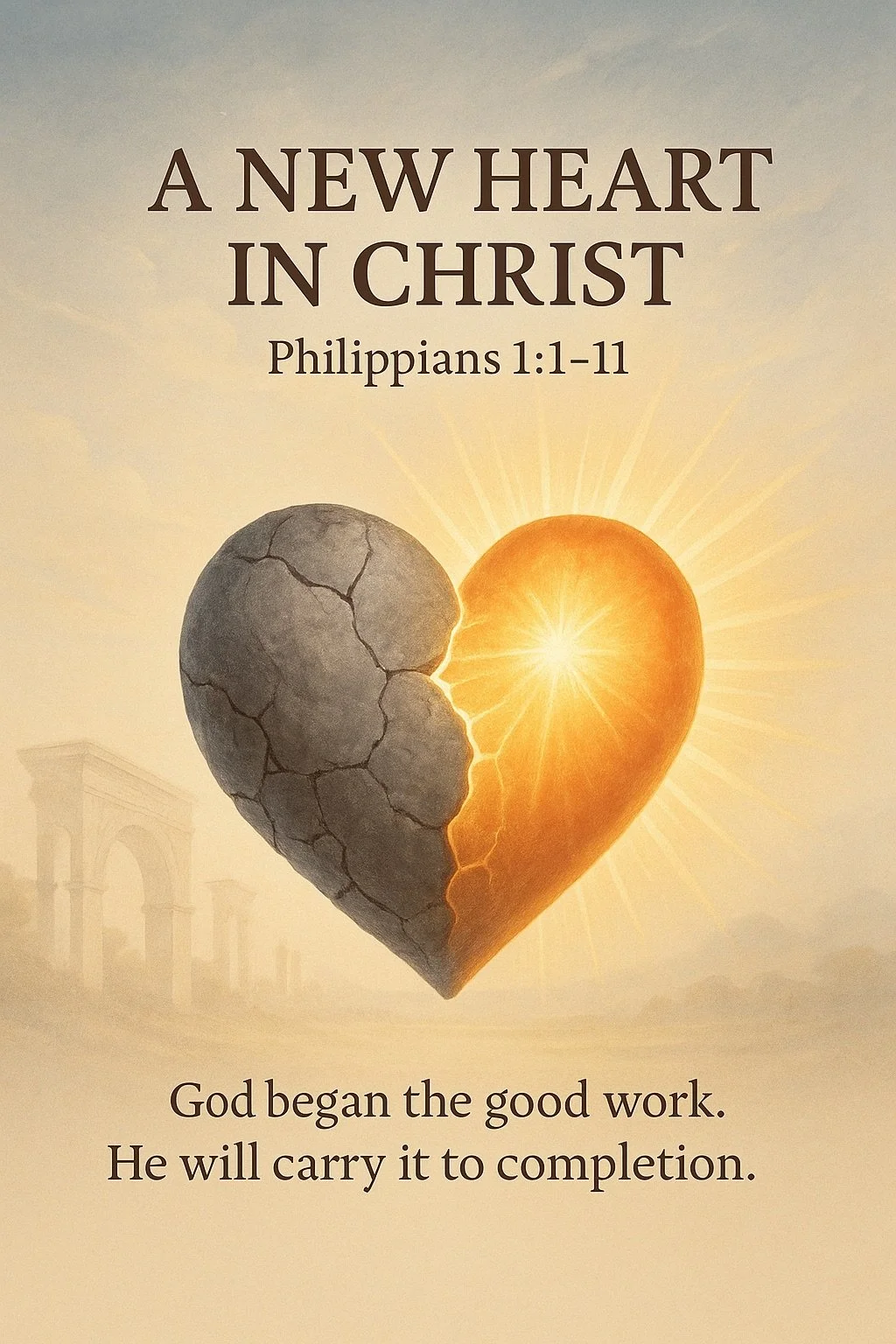
Bible Study: A life worth living - Session 1 (A New Heart)

Bible passage: Philippians 1:1-11

Link: https://www.biblegateway.com/passage/?search=phil%201%3A1-11&version=NIV;NVI


Summary of our bible discussion

When we come to Jesus, He gives us more than a fresh start—He gives us a new heart. In Philippians 1, Paul is writing to a church he dearly loves, reminding them that their identity no longer comes from being Roman citizens in Philippi, but from belonging to Jesus. Their truest identity is not defined by their past, their job, or their nationality—it is defined by being “in Christ.” That is the beginning of a new heart: knowing who you really are in Him.


A new heart also brings a new way of living. Instead of chasing status or pride, Paul calls believers to live as God’s holy people—set apart, not because we are perfect, but because we belong to Jesus. This newness shows up in practical ways: choosing to love when others hate, forgiving when others hold grudges, and living with integrity in a world that cuts corners. A new heart means God’s grace flows into us and then out of us, so others can see His love through our lives.


Paul also shows that a new heart beats with confidence and joy. Even though he’s writing from prison, he is full of gratitude, because he knows God is faithful. He reminds the Philippians—and us—that the Christian life is God’s project. He began the good work in us, and He will carry it through to completion on the day Jesus returns. That truth gives us hope: even when we feel unfinished, God isn’t done with us yet.


Finally, a new heart gives us new priorities. Paul prays that the Philippians’ love would grow in knowledge and discernment, so they can choose what is best and live pure and blameless lives. This is not about ticking religious boxes, but about being filled with the fruit of righteousness—the visible evidence that Jesus lives in us. In other words, a new heart is not just changed on the inside; it produces a new way of living on the outside.


Resumen de nuestra discusión bíblica

Cuando venimos a Jesús, Él nos da más que un nuevo comienzo: nos da un corazón nuevo. En Filipenses 1, Pablo escribe a una iglesia que ama profundamente, recordándoles que su identidad ya no proviene de ser ciudadanos romanos en Filipos, sino de pertenecer a Jesús. Su identidad más verdadera no está definida por su pasado, su trabajo o su nacionalidad, sino por estar “en Cristo”. Ese es el comienzo de un nuevo corazón: saber quién eres realmente en Él.

Un corazón nuevo también trae una nueva forma de vivir. En lugar de perseguir estatus o orgullo, Pablo llama a los creyentes a vivir como el pueblo santo de Dios—apartados, no porque seamos perfectos, sino porque pertenecemos a Jesús. Esta novedad se manifiesta de formas prácticas: elegir amar cuando otros odian, perdonar cuando otros guardan rencor y vivir con integridad en un mundo que busca atajos. Un corazón nuevo significa que la gracia de Dios fluye hacia nosotros y luego a través de nosotros, para que otros puedan ver Su amor en nuestras vidas.

Pablo también muestra que un corazón nuevo late con confianza y gozo. Aunque escribe desde la cárcel, está lleno de gratitud porque sabe que Dios es fiel. Recuerda a los filipenses—y a nosotros—que la vida cristiana es un proyecto de Dios. Él comenzó la buena obra en nosotros, y la llevará a cabo hasta completarla en el día en que Jesús regrese. Esta verdad nos da esperanza: incluso cuando nos sentimos inacabados, Dios aún no ha terminado con nosotros.

Finalmente, un corazón nuevo nos da nuevas prioridades. Pablo ora para que el amor de los filipenses crezca en conocimiento y discernimiento, para que puedan elegir lo mejor y vivir vidas puras e intachables. No se trata de marcar casillas religiosas, sino de estar llenos del fruto de justicia—la evidencia visible de que Jesús vive en nosotros. En otras palabras, un corazón nuevo no solo cambia por dentro; produce una nueva forma de vivir por fuera.